
Google Maps location
Citing a Google Maps location can be straightforward once you know the right steps. Begin by identifying the title of the map, which might be the name of a street, landmark, or entire area.
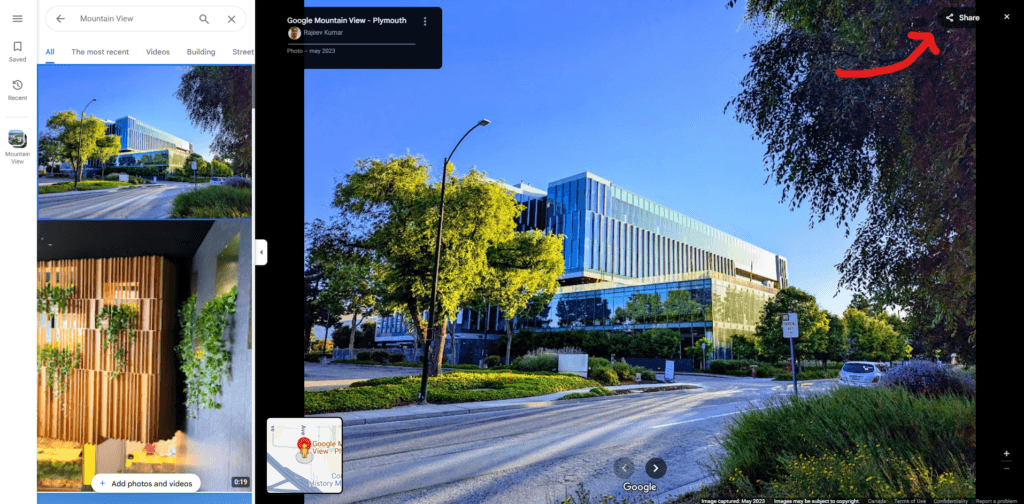
Next, click on the “Share” option in the side panel. This will give you a short URL. Your readers can use this link to access the spot you’re referencing directly.
When citing maps from services like Digimap, remember to follow their specific guidelines. When using Google Maps, you can follow a clear and consistent way to show your sources in academic work.
– Always include the publisher, which is Google Maps.
– Mention the year it was published, usually the current year.
– Include the map’s title and scale.
– Provide the web address.
– State the date you accessed it.
Below is a helpful template:
Google Maps (Year) Title of map, scale. Available from: [Short URL or full URL] [Accessed day month year].
For instance, if you were citing a map of a local park in 2023, you could write:
Google Maps (2023) City Park, 1:100. Available from:
https://maps.app.goo.gl/9qygTaWYWe3wxdJX9 [Accessed 15 January 2025].
In-text citations would look like this:
(Google Maps, 2023)
Giving details like the publisher’s name, scale, and access date shows accuracy in your work. It also helps readers check the source.
Make sure to use the same citation style for all your sources. This includes books, journal articles, and digital maps. This way, your references will stay clear and consistent.
Following these steps should leave you feeling confident whenever you reference Google Maps. A good citation looks professional. It also helps others find the same resource you used.

Michelle F. is a content marketing specialist at Zenith, a local SEO agency. She develops content strategies that help local businesses stand out on Google and attract qualified leads. Before joining Zenith, she worked with several Quebec-based brands to grow their online presence.