


Blog
How Many Internal Links Per Page for SEO?
The general rule is simple: add about 5–10 internal links per 2,000 words to keep your content clear, useful, and SEO-friendly.

Raphaël Larouche
Updated 3 min read

Internal linking is one of the most underrated levers in SEO.
It’s also a tool most SEO agencies
Do it right, and you can spread PageRank across your site, help Google crawl faster, and guide users exactly where you want them to go. Do it wrong, and you’ll dilute authority, confuse crawlers, and overwhelm readers.
So… how many internal links should you use per page in 2025?
Let’s break it down.
How Many Internal Links Per Page Is Best for SEO?
The general recommendation is simple: aim for about 5-10 internal links per 2,000 words.
That works out to roughly 1 link every 200-400 words, a safe range that balances SEO with readability.
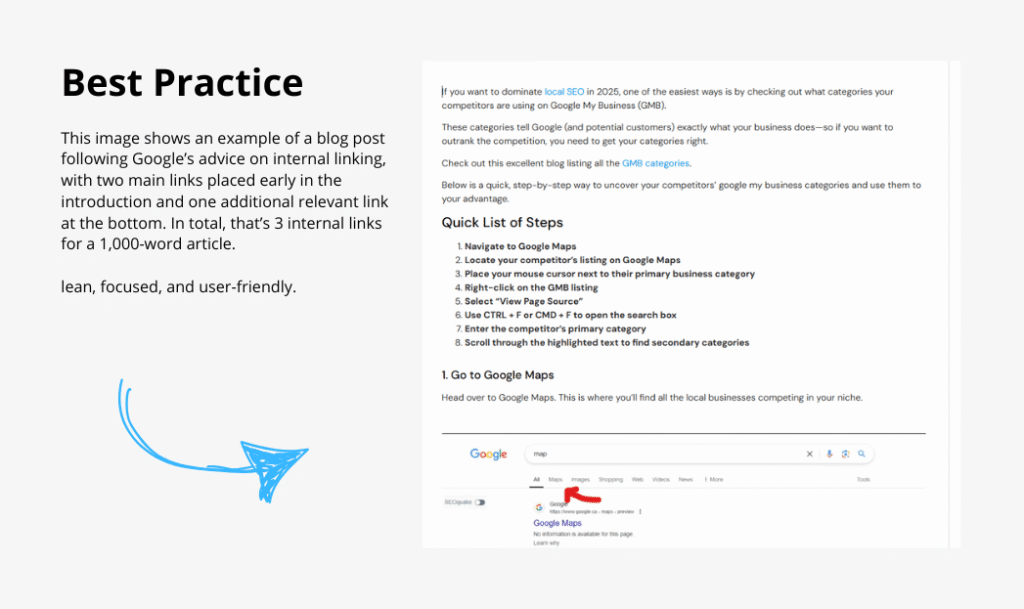
But here’s where it gets interesting: in our own sample study of 1,000 blogs ranking #1 (For informational keywords), we noticed that most of them actually use almost double that recommendation.
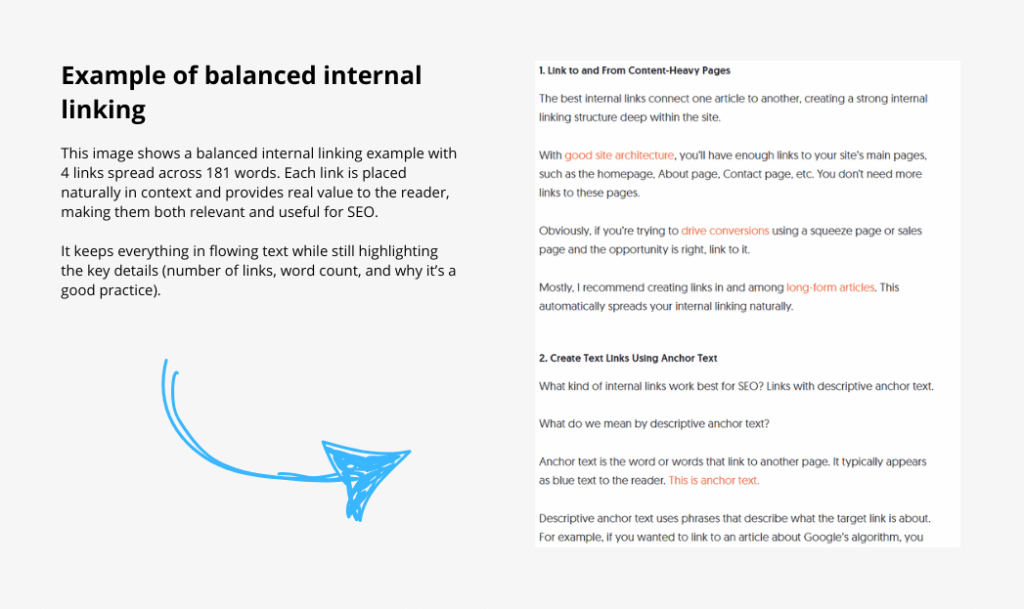
So what does that mean for you? It means the “5-10 rule” is a solid baseline… but you don’t need to stress if your page has 15-20 links, as long as they’re relevant and natural.
The only real danger is going overboard. If your content starts looking like a wall of blue text, you’ve gone too far.
Google’s Take: “A Reasonable Number”
Once upon a time, Google recommended keeping links under 100 per page. That was back when their crawlers were less powerful.
Fast forward to today: that rule is gone.
In the official Search Essentials, Google now says use a “reasonable number” of links, clarified by Googlers to mean “a few thousand at most.”
The kicker? Just because Google can crawl thousands doesn’t mean you should.
John Mueller has been blunt about this: there’s no hard cap, but “more is not always better.” Overdoing internal links makes it harder for Google to understand which pages on your site actually matter.
Translation: Google won’t penalize you for 200 links on a page. But if you want clarity and rankings, keep it focused.
Why Too Many Links Can Backfire
Adding 50, 100, or 300 internal links to a single page might look like a strong play. In reality, it usually hurts more than it helps. Here’s why:
1. PageRank Dilution
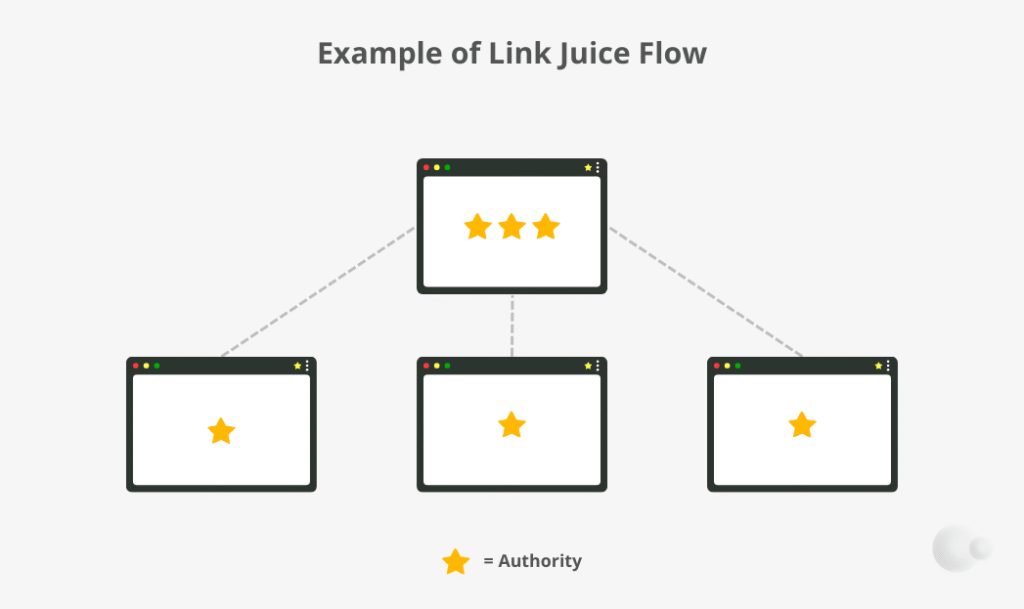
Internal links distribute authority across your site. But the more links you add, the thinner that equity gets spread.
Mueller even pointed out that if you have 20+ internal links on a page, each one will be treated as less important than if you only had a few.
Bottom line: a handful of strong links beats a wall of weak ones.
2. Crawlability Issues
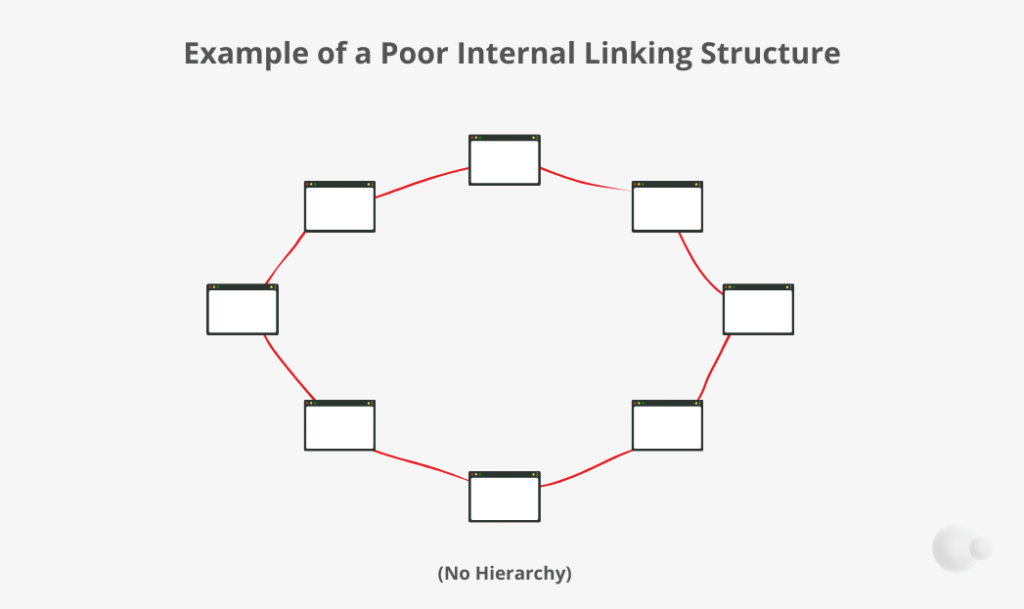
Yes, Googlebot can handle thousands of links. But dump too many on a page and you create a flat, messy structure.
If every page links to every other page, Google can’t figure out hierarchy. Which means it won’t know which page is the one you actually want to rank.
Worse: studies show that pages with hundreds of links often don’t get fully crawled. Google might follow some, but not all.
3. User Experience
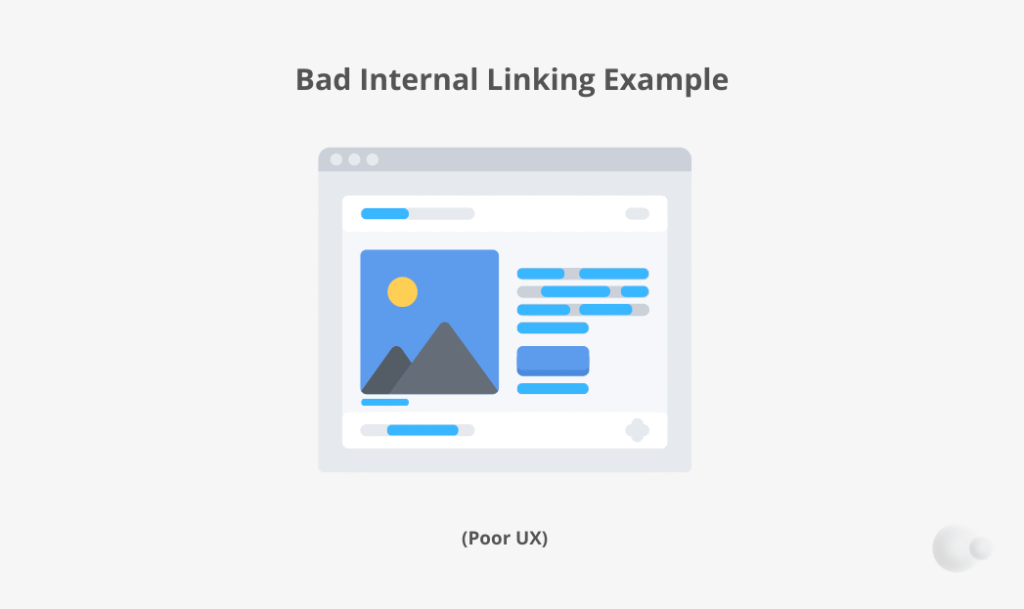
Imagine reading a post where every other sentence is a hyperlink. You’d either get distracted, or stop clicking altogether.
That’s called link fatigue. And it’s not just bad UX, it’s bad SEO.
Google cares about engagement. If users bounce or skim because your content is drowning in blue links, that can send the wrong signals.
The fix: make every internal link purposeful. Place them where they genuinely help the reader. Spread them out naturally in the content.
The Takeaway
Internal links are powerful. But like most things in SEO, quality beats quantity.
- Google doesn’t give you a magic number.
- Too many links dilute PageRank and confuse crawlers.
- UX matters: link where it’s useful, not everywhere possible.
So, instead of aiming for “as many as possible,” aim for as many as make sense.
That’s the difference between a page that leaks authority… and one that ranks.